#Blogs ·2026-09-03
Personalized enamel pins have become a versatile product for brands, businesses, events, organizations, artists, clubs, and promotional campaigns. A well-designed enamel pin can turn a logo, illustration, mascot, symbol, or creative concept into a small physical product that people can wear, collect, share, or use as part of a brand experience.
However, creating a successful custom enamel pin involves more than choosing a design and sending it to a factory. The manufacturer you work with can directly affect the appearance, durability, cost, production consistency, and delivery of the final product.
For companies looking for a personalized enamel pin manufacturer, the key is to find a supplier that can support the entire process—from artwork and material selection to sampling, production, quality inspection, packaging, and shipping.
This guide explains how personalized enamel pins are made, what customization options are available, how to evaluate a manufacturer, and what buyers should consider before placing an order.
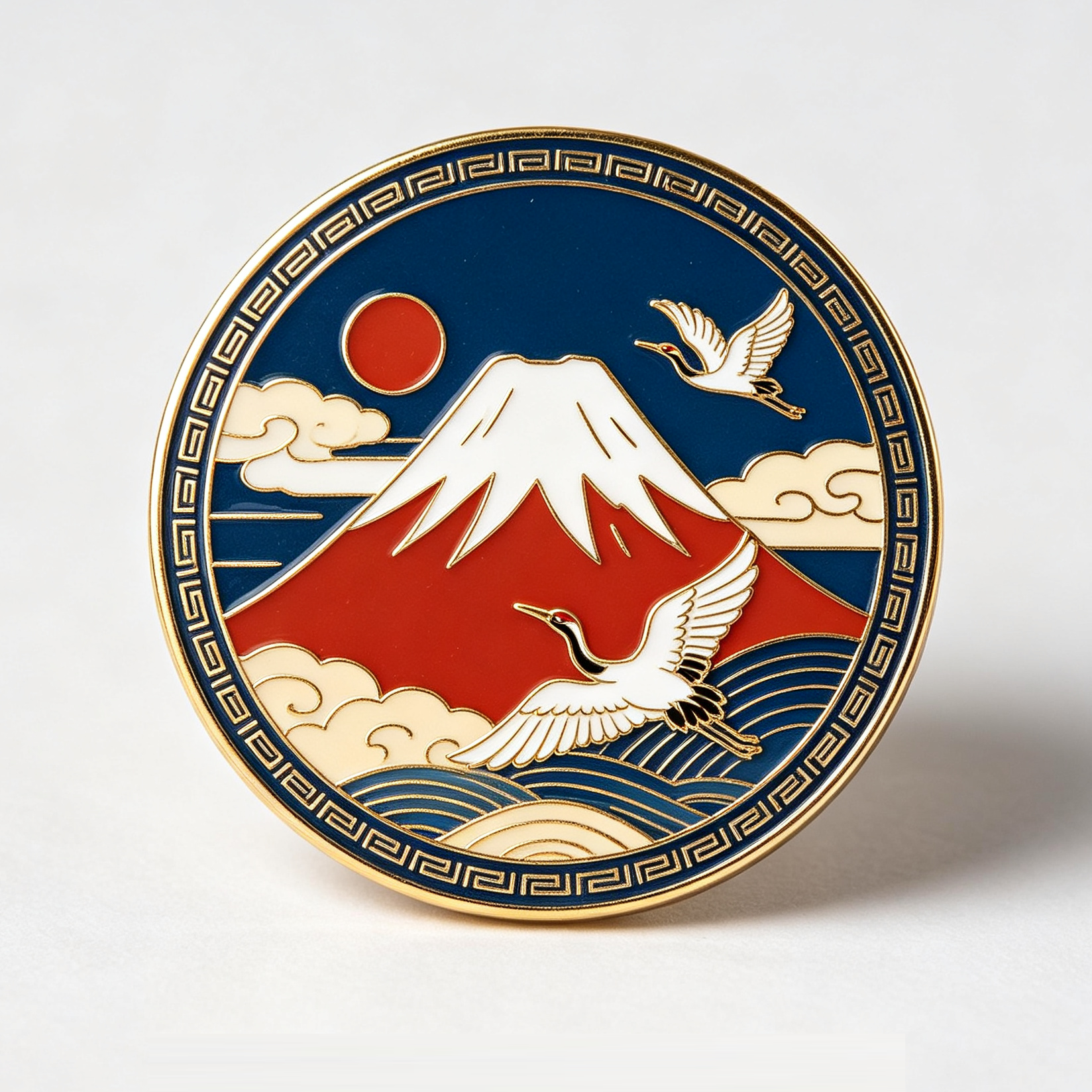
Personalized enamel pins are custom-made metal pins produced according to a customer's own artwork, logo, shape, colors, text, or design concept.
Unlike standard promotional products, personalized enamel pins can be designed around almost any visual identity. They can feature:
The basic structure normally consists of a metal base with recessed areas filled with enamel color. Different metal finishes, enamel types, dimensions, attachments, and packaging can then be selected according to the intended application and budget.
For this reason, enamel pins are used across many industries, from corporate branding and promotional merchandise to entertainment, fashion, events, education, sports, and community organizations.
A personalized enamel pin is a relatively small product, but it can provide several functions at the same time.
Businesses can transform their logo or brand identity into wearable merchandise. Pins can be distributed at trade shows, conferences, product launches, employee events, or customer campaigns.
Custom pins can serve as event souvenirs, participant gifts, commemorative products, or collectible merchandise.
Schools, universities, clubs, associations, sports teams, military-related organizations, and community groups can use custom pins to represent membership and shared identity.
Artists, designers, fashion brands, entertainment companies, and independent creators can develop enamel pins as products for their own merchandise collections.
Limited-edition designs, numbered series, seasonal artwork, and character-based pins can encourage repeat purchases and collecting.
The most effective applications usually begin with a clear purpose. Before manufacturing, buyers should decide whether the pin is intended for promotion, retail, membership, an event, a gift, or long-term collecting.
Although the exact production process varies according to the design and selected finish, a typical custom enamel pin project involves several stages.
The process begins with customer artwork, a logo, sketch, reference image, or even a basic concept.
A professional manufacturer should be able to review the artwork and identify potential manufacturing issues before production begins.
For example, very small details, narrow metal lines, tiny text, or complicated color areas may require design adjustments to achieve a clean finished result.
This stage is important because a design that looks good on a computer screen does not necessarily translate directly into a physical metal pin.
Customers can generally choose between different enamel options, including soft enamel and hard enamel.
Soft enamel has recessed metal lines and a textured surface. It is a popular choice for colorful promotional pins and designs where a clear metal outline is desired.
Hard enamel is filled and polished to create a smoother, more jewelry-like surface. It is often selected when the finished pin requires a clean and premium appearance.
The best option depends on the artwork, desired appearance, budget, and application.
The metal finish is another important part of the final appearance.
Depending on the project, customers may consider finishes such as:
The same artwork can look significantly different depending on the selected metal finish, so it is useful to evaluate the complete combination of enamel colors and plating rather than considering them separately.
For custom-shaped metal pins, the artwork is converted into production specifications and a mold is prepared.
The mold defines the metal structure, outlines, recessed areas, and overall shape of the pin.
At this stage, experienced manufacturers can identify whether certain details need to be simplified or adjusted before mass production.
After the metal base is produced, enamel colors are applied to the designated areas.
The pin is then finished according to the selected production method. Depending on the product specification, additional polishing, plating, printing, or finishing processes may be involved.
Quality inspection should not be treated as an optional final step.
A reliable enamel pin manufacturer should check important details such as:
For larger orders, quality control is particularly important because consistency across the entire production batch matters as much as the quality of an individual sample.
Personalized enamel pins can be supplied with standard back cards, custom backing cards, individual bags, gift boxes, or other customized packaging.
For brands selling pins as retail merchandise, packaging can be part of the product experience rather than simply a protective layer.
After production and inspection, the manufacturer can arrange shipping according to the buyer's destination and project requirements.
One of the main advantages of working with an experienced personalized enamel pin manufacturer is the number of variables that can be customized.
Pins do not have to be limited to circles, squares, or standard badge shapes. Custom outlines can follow logos, characters, objects, animals, products, or other creative concepts.
The appropriate size depends on the amount of detail, intended use, and desired visual impact.
Smaller pins are convenient for everyday wear, while larger designs can accommodate more visual information.
Customers can specify enamel colors according to their artwork and brand identity.
For corporate and retail products, maintaining consistent colors across production batches is especially important.
The choice of plating changes the overall character of a pin. Bright finishes can create a clean modern appearance, while antique finishes can create a vintage or collectible aesthetic.
Different backing options can be selected depending on how the pin will be worn or displayed.
For promotional campaigns and retail products, customized packaging can include brand logos, product information, barcodes, artwork, or other elements.
Choosing a manufacturer based only on the lowest quotation can create problems later.
A reliable supplier should be evaluated across several areas.
Experience matters because enamel pin production involves many small technical decisions.
A manufacturer with extensive experience is more likely to identify problems in artwork, materials, production specifications, and finishing before they become expensive production issues.
Not every buyer has manufacturing-ready artwork.
A good OEM/ODM partner should be able to help convert a concept, sketch, image, or logo into a production-ready design.
This is particularly valuable for startups, artists, small businesses, and marketing teams that do not have an in-house product development team.
A sample or digital production proof gives the buyer an opportunity to review the design before mass production.
Important details to confirm include:
A clear approval process helps reduce misunderstandings between the buyer and manufacturer.
Ask the manufacturer how products are inspected before shipment.
Quality control should cover both appearance and functionality, including enamel filling, plating, attachments, dimensions, and packaging.
A manufacturer should be able to handle the required order quantity while maintaining consistent quality.
At the same time, buyers with smaller projects may prefer a supplier that can support flexible order quantities instead of requiring unnecessarily large minimum orders.
Communication is often overlooked when comparing suppliers.
A responsive manufacturer can make a significant difference when a project requires artwork revisions, quotation adjustments, sample confirmation, production updates, or shipping coordination.
For international buyers, dealing with multiple suppliers for design, production, packaging, and logistics can make a project unnecessarily complicated.
A one-stop OEM/ODM manufacturer can simplify the process by coordinating multiple stages through one supplier.
Before placing an order, buyers should consider asking:
The more specific the answers, the easier it is to compare manufacturers accurately.
Different customers have different manufacturing priorities.
Brand owners usually prioritize color accuracy, consistent quality, premium finishing, and packaging.
Artists may need help converting detailed illustrations into production-friendly enamel pin artwork.
Event organizers often prioritize production schedules, quantity, packaging, and delivery deadlines.
Marketing teams may prioritize cost efficiency, flexible quantities, branding, and fast production.
Retail products require greater attention to finishing, consistency, packaging, and overall perceived value.
Understanding the buyer's end use allows the manufacturer to recommend the most suitable production specifications rather than simply producing the same type of pin for every project.
OEM and ODM manufacturing can be particularly useful when a customer wants more control over product design.
With OEM production, customers can provide their own specifications, branding, artwork, or product concept and have the manufacturer produce the finished product accordingly.
ODM support can go further by helping customers develop or refine a product based on manufacturing expertise and available production capabilities.
For personalized enamel pins, this can include support with:
This integrated approach can reduce communication gaps and make the product development process easier for overseas buyers.
DOUBLE HAPPY GIFT is a China-based manufacturer specializing in customized metal crafts and personalized accessories.
The company has more than 15 years of manufacturing experience and provides custom products including enamel pins, lapel pins, challenge coins, medals, lanyards, wristbands, keychains, PVC patches, and promotional gifts.
For personalized enamel pin projects, DOUBLE HAPPY GIFT positions its service around a one-stop OEM/ODM model. Customers can provide pictures, sketches, logos, or product concepts, while the team assists with the development and production process. The company's stated service model covers design support, customization, production, quality assurance, packaging, and shipping.
The company also states that it provides free artwork and 3D sampling support, one-on-one service, and direct factory sourcing. Its website describes a quality inspection process and emphasizes production scheduling and delivery coordination.
This type of integrated service can be particularly useful for international buyers who want one manufacturing partner to manage a personalized enamel pin project from the initial concept through final delivery.
Before approving production, make sure the following information has been confirmed:
Design
Production
Quality
Commercial
A clear specification sheet can significantly reduce production misunderstandings.
Standard pins are usually produced from predefined designs, while personalized enamel pins are manufactured according to the customer's own artwork, logo, shape, colors, or specifications.
Yes. A custom enamel pin manufacturer can typically convert a company logo or existing artwork into a production-ready pin design. Very small details may need to be adjusted for manufacturing.
Neither is universally better. Soft enamel provides a textured surface and is widely used for colorful custom designs, while hard enamel provides a smoother and more polished appearance. The best choice depends on the design, application, budget, and desired finish.
Yes. Custom-shaped pins can be manufactured to follow logos, characters, objects, mascots, or other designs.
Many OEM/ODM manufacturers provide artwork assistance. This can be especially helpful when the original image is not prepared according to manufacturing requirements.
Yes. Custom backing cards, bags, boxes, and other packaging options can be incorporated into a personalized pin project depending on the manufacturer's capabilities.
Ideally, provide your artwork or reference image, approximate size, quantity, enamel type if known, plating preference, backing type, packaging requirements, and delivery destination.
If some specifications are not yet decided, a professional manufacturer should be able to recommend suitable options.
A successful personalized enamel pin is the result of more than a good design. The quality of the final product depends on the combination of artwork preparation, materials, enamel application, plating, production control, inspection, packaging, and communication.
For buyers searching for a personalized enamel pin manufacturer, the best supplier is not necessarily the one offering the lowest initial quotation. A better long-term partner is a manufacturer that understands the product, communicates clearly, provides practical customization advice, maintains consistent quality, and can support the project from design through delivery.
With more than 15 years of experience in customized metal crafts and a one-stop OEM/ODM service model, DOUBLE HAPPY GIFT provides personalized enamel pins and related custom accessories for brands, businesses, organizations, events, and other international projects.
If you have an existing design, sketch, logo, or simply an idea for a personalized enamel pin, the first step is to share the concept and specifications with the manufacturer. From there, the right production process, materials, finishes, and packaging can be evaluated according to the project's requirements.
2026-10-08
2026-09-03
2026-08-06